Can You Eat Fruit While Managing Blood Sugar? Low-Sugar Summer Fruits to Enjoy
Many people avoid fruit because they worry that the natural sugar in fruit will cause their blood sugar to spike.
However, not all fruits affect blood sugar in the same way. Choosing the right fruits and eating them in moderation can provide valuable nutrients, fiber, and antioxidants while supporting overall health.
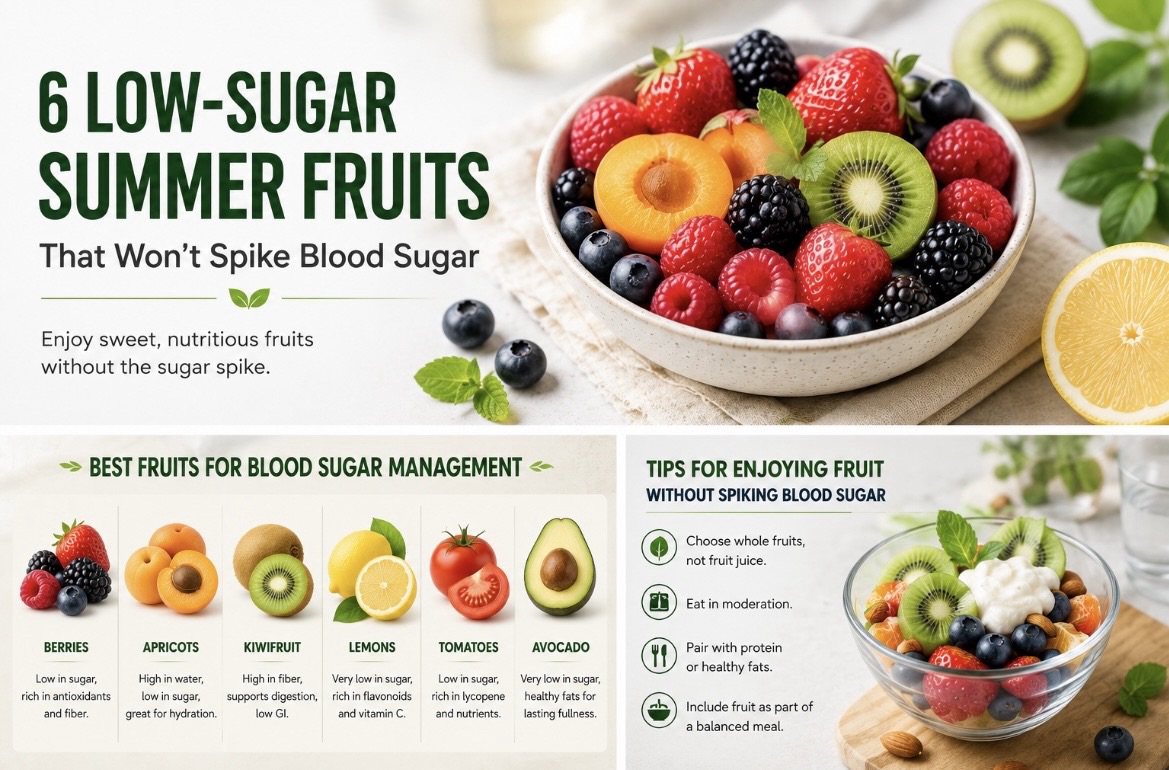
Here are some of the best low-sugar summer fruits that may fit into a blood sugar-friendly diet.
You Don’t Have to Avoid Fruit
Although fruit contains natural sugars, it is also packed with dietary fiber, vitamins, minerals, and powerful antioxidants.
Fiber helps slow the absorption of sugar, which may reduce rapid increases in blood glucose after eating.
The key is choosing the right fruits and eating appropriate portions.
A serving of about 100–150 grams (3.5–5.3 oz) is generally recommended. For example:
- Half to one medium apple
- About 5–10 strawberries
- One serving of one or two different fruits
What’s the Best Way to Eat Fruit?
The way you eat fruit can make a difference.
Here are a few simple tips:
- Enjoy moderate portions instead of eating large amounts at once.
- Choose whole, fresh fruit whenever possible.
- Eat whole fruit instead of drinking fruit juice.
- Include fruit as part of a balanced meal or snack.
Fruit juice contains much less fiber than whole fruit, allowing natural sugars to be absorbed more quickly.
Best Low-Sugar Fruits for Blood Sugar Management
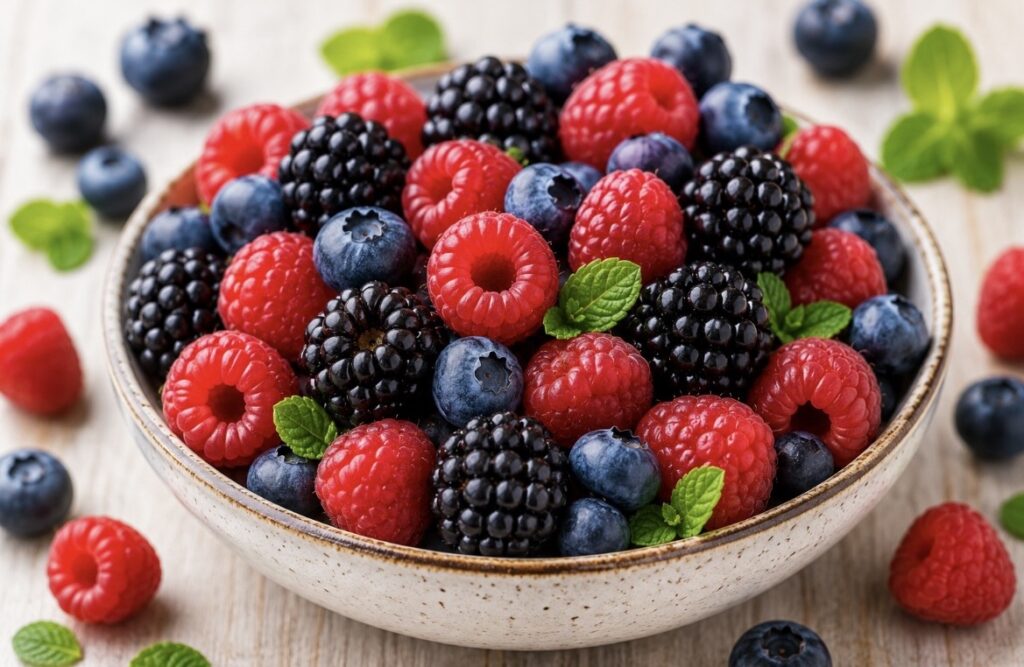
1. Berries (Blackberries, Raspberries, and Korean Black Raspberries)
Berries are naturally lower in sugar than many other fruits while being rich in antioxidants.
They contain anthocyanins and polyphenols, plant compounds that have been studied for their potential role in supporting healthy blood sugar levels and reducing inflammation.
Their high fiber content also helps you feel full longer.
2. Apricots
Apricots are high in water and relatively low in sugar, making them a refreshing choice during the summer.
Staying hydrated is important for maintaining healthy body functions, and apricots can help contribute to your daily fluid intake.
3. Kiwifruit
Kiwifruit is an excellent source of both soluble and insoluble fiber, which supports digestive health and may help relieve constipation.
It also has a relatively low glycemic index (GI), making it a popular choice for people who are watching their blood sugar.
4. Lemons
Lemons are naturally very low in sugar and rich in flavonoids.
These beneficial plant compounds may help support healthy glucose metabolism while protecting cells from oxidative stress.
Their refreshing flavor also makes them an easy addition to water, salads, and various dishes.
5. Tomatoes
Although tomatoes are botanically classified as fruits, they are commonly enjoyed as vegetables.
They are naturally low in sugar and rich in lycopene, a powerful antioxidant associated with heart health and healthy aging.
Tomatoes are a nutritious addition to almost any meal.
6. Avocados
Unlike most fruits, avocados are rich in heart-healthy monounsaturated fats.
They contain very little sugar while providing lasting fullness, making them an excellent option for weight management and overall metabolic health.
Some studies also suggest that replacing foods high in saturated fat with avocado may help improve cholesterol levels.
Tips for Enjoying Fruit While Managing Blood Sugar
✔ You don’t need to eliminate fruit from your diet.
✔ Eat moderate portions rather than large amounts at once.
✔ Choose whole fruit instead of fruit juice.
✔ Focus on fruits that are naturally high in fiber and relatively low in sugar.
Frequently Asked Questions
Can I eat fruit if I have high blood sugar?
Yes. Most fruits can be part of a healthy eating plan when eaten in appropriate portions. The type of fruit and serving size matter more than avoiding fruit altogether.
Which fruits tend to raise blood sugar more quickly?
Eating large amounts of very ripe bananas, watermelon, dried fruits (such as raisins or dried mango), and fruit juices may cause blood sugar to rise more rapidly.
When is the best time to eat fruit?
Fruit is often best enjoyed as part of a balanced meal or snack. Eating large amounts of fruit by itself on an empty stomach may lead to faster sugar absorption for some people.
Is fruit juice as healthy as whole fruit?
Not exactly. Fruit juice contains much less fiber than whole fruit, so the natural sugars are absorbed more quickly. Whole fruit is generally the better choice.
Can people with diabetes eat bananas?
Yes. People with diabetes can still enjoy bananas in moderation. Choosing a smaller banana or eating half of a large one with other foods may help reduce blood sugar spikes.
Final Thoughts
Managing your blood sugar doesn’t mean you have to give up fruit.
Instead, focus on choosing fruits that are naturally lower in sugar and rich in fiber, vitamins, and antioxidants. Berries, kiwifruit, apricots, tomatoes, lemons, and avocados are all excellent choices that can support a healthy, balanced diet.
As always, moderation is key. Enjoy a variety of whole fruits as part of an overall healthy lifestyle.