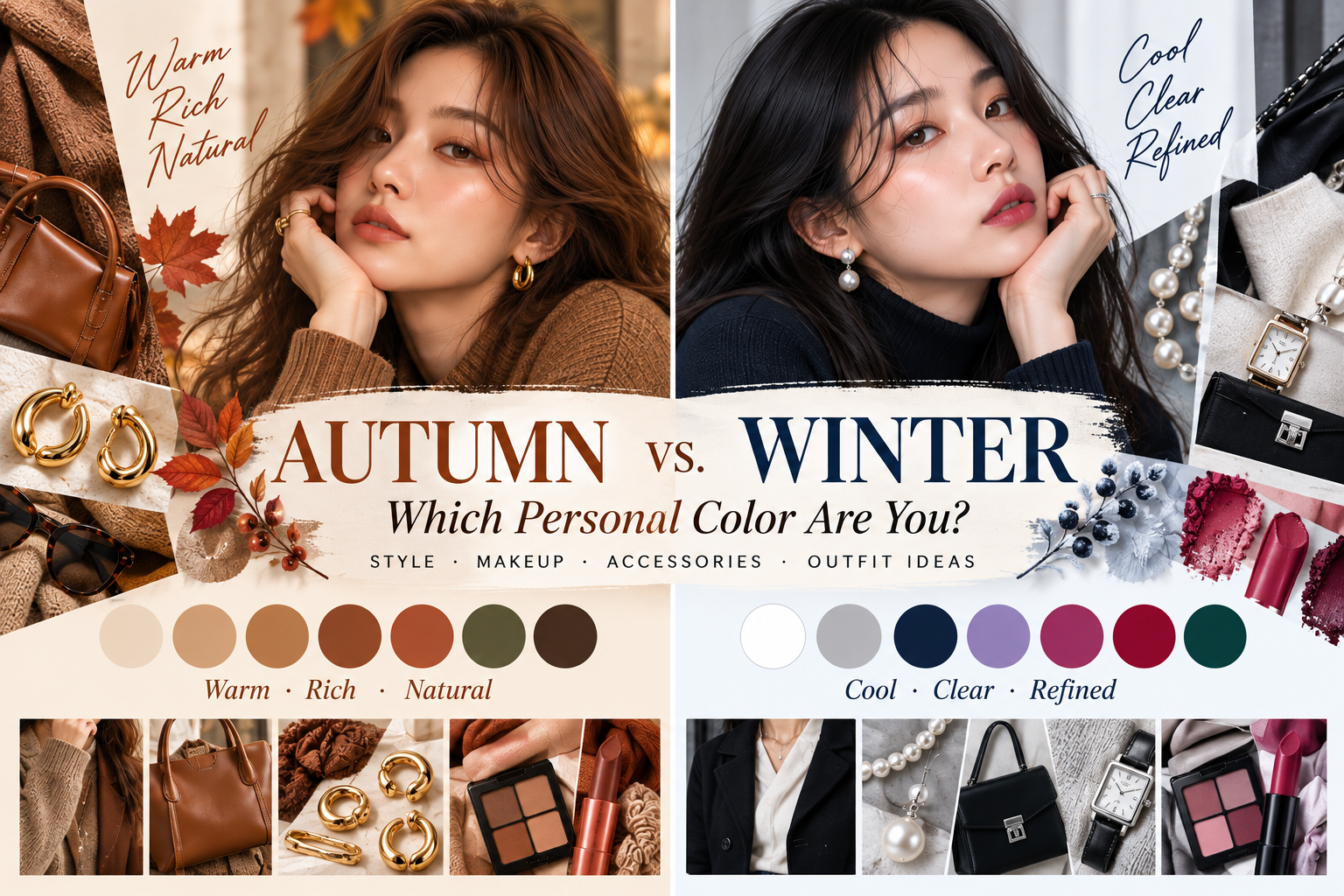
Autumn vs. Winter: Which Personal Color Are You?
In my last personal color post, we compared Spring and Summer.
Both seasons tend to shine in lighter, brighter colors, but they create very different impressions. Spring feels warm, fresh, and lively, while Summer has a softer, cooler, and more understated quality.
Now it’s time to move to the deeper side of the seasonal color palette: Autumn and Winter.
Compared with Spring and Summer, both Autumn and Winter tend to have more depth, richness, and visual weight.
Think burgundy, deep brown, forest green, navy, and black—colors that have a stronger presence and can create a more sophisticated, elegant look.
But even though Autumn and Winter share that sense of depth, the overall mood of each season is very different.
Autumn is warm, rich, and softly deep. Winter is cool, clear, and sharply defined.
Once you understand that difference, it becomes much easier to tell the two seasons apart.
Autumn — Warm, Rich, and Earthy
When I think of Autumn colors, I immediately think of nature.
Fallen leaves, warm browns and oranges, olive green, mustard, camel, terracotta, and deep wine shades.
There’s an overall sense of warmth and richness to the Autumn palette.
Spring is also a warm season, but while Spring feels bright and sunlit, Autumn is deeper, softer, and more grounded.
Some classic Autumn colors include:
Camel · Chocolate Brown · Olive · Khaki · Rust · Terracotta · Mustard · Warm Burgundy · Cream
Instead of bright white, cream and ivory often feel more harmonious. And instead of true black, chocolate brown or a warm deep brown may look softer and more natural against the face.
The beauty of Autumn isn’t necessarily about standing out with bright color.
It’s about looking rich, natural, warm, and effortlessly sophisticated.
Winter — Cool, Clear, and Striking
Winter can also handle deep, powerful colors—but in a completely different way.
Instead of the warm, earthy undertones we see in Autumn, Winter is defined by coolness, clarity, and contrast.
Black and pure white, cool navy, emerald, royal blue, fuchsia, berry tones, and blue-based reds are all classic Winter shades.
Black · Pure White · Navy · Cobalt Blue · Emerald · Cool Burgundy · Berry · Fuchsia · Blue-Based Red
If Autumn reminds you of the blended, earthy colors of a fall landscape, Winter is more like a black coat against fresh white snow or a bold red lip against clear skin.
The contrast is stronger and more intentional.
For many Winter types, strong colors don’t overpower their features. Instead, they can make the eyes, skin, and overall facial structure appear even more defined.
Winter’s sophistication comes from clarity and contrast rather than softness.
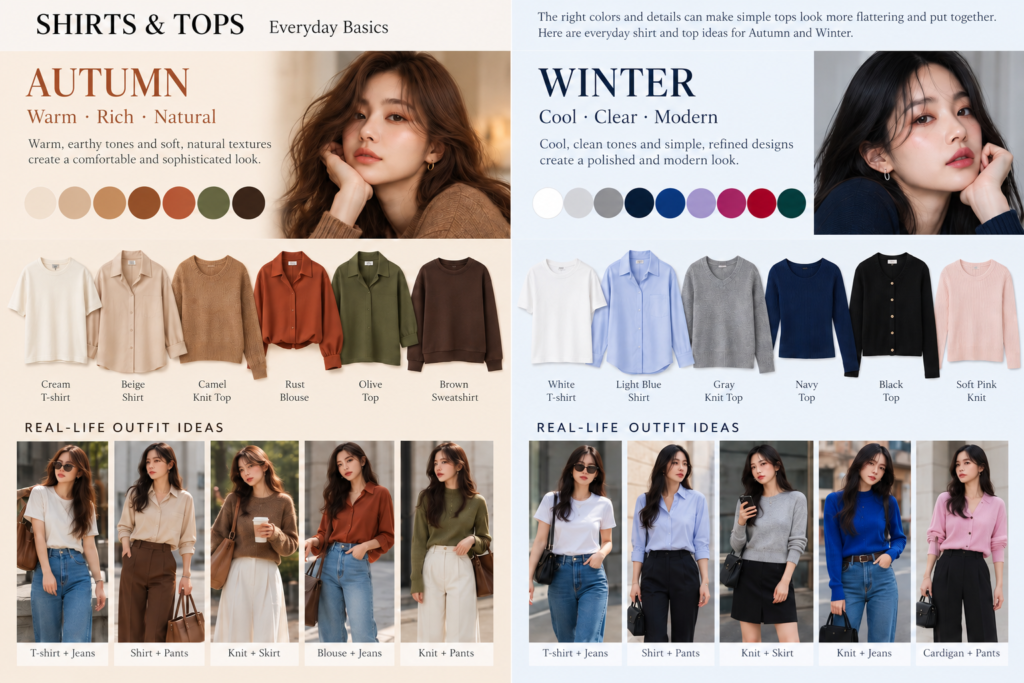
Autumn vs. Winter: Warm Depth vs. Cool Contrast
Here’s a simple way to see the difference.
AUTUMN
Undertone: Warm
Overall Mood: Rich & Earthy
Depth: Deep & Soft
Best Neutrals: Camel, Brown, Cream
Reds: Brick, Rust, Warm Burgundy
Greens: Olive, Moss, Khaki
Metals: Gold, Bronze
Overall Image: Warm, Elegant, Natural
WINTER
Undertone: Cool
Overall Mood: Clear & Refined
Depth: Deep & Crisp
Best Neutrals: Black, White, Navy
Reds: Cherry, Berry, Cool Burgundy
Greens: Emerald, Cool Forest Green
Metals: Silver, White Gold
Overall Image: Cool, Polished, Striking
Both seasons can look incredibly elegant and sophisticated.
The difference is really in the type of elegance they create.
Autumn elegance feels warm, rich, organic, and softly luxurious.
Winter elegance feels cool, polished, clean, and defined.
You Can See the Difference in Makeup, Too
Sometimes the difference between Autumn and Winter is even easier to see through makeup than clothing.
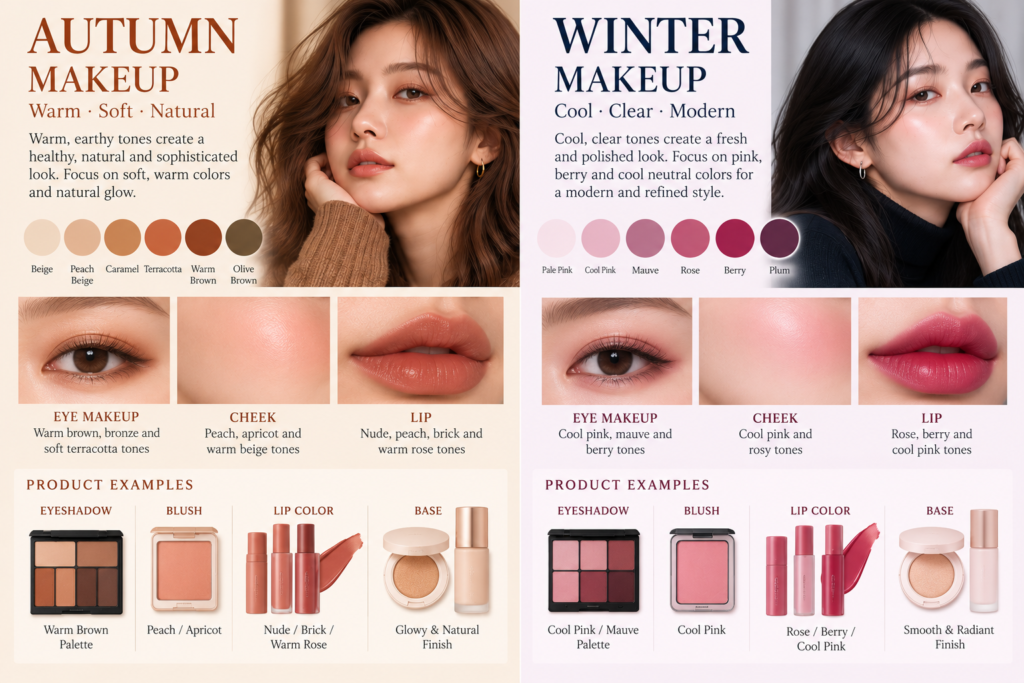
Autumn Makeup
For Autumn types, warm shades like brown, brick, terracotta, peach, and warm beige tend to blend beautifully with the skin.
Instead of a very sharp black eye, brown or deep brown can create definition while keeping the overall look soft and harmonious.
For everyday lips, nude peach, warm rose, muted brick, and soft terracotta shades can work beautifully without feeling overly dramatic.
The overall effect is rich, warm, natural, and sophisticated.
Winter Makeup
Winter makeup doesn’t have to mean dramatic red lipstick or heavy eye makeup.
For everyday makeup, cool rose, mauve, soft berry, and cool pink shades can bring out Winter coloring while still looking natural and wearable.
A clean complexion, softly defined eyes, and a cool rose or berry-toned lip can create just enough contrast without looking overdone.
The overall effect is clean, cool, fresh, and polished.
Clothing Details Matter, Too
Personal color isn’t only about choosing the right shade.
The lines, textures, and overall feeling of an outfit can also help bring out the character of each season.
Autumn naturally works well with softer shapes, curved details, relaxed silhouettes, and fabrics with visible texture.
Think cozy knits, soft cardigans, relaxed shirts, denim, suede, leather, and pieces that feel warm and tactile.
Winter often looks especially polished in cleaner lines and slightly more structured silhouettes.
That doesn’t mean Winter needs to live in suits and tailored jackets. A simple white T-shirt with dark denim, a navy knit, a gray sweater, or a black cardigan can work beautifully.
The difference is often in the cleaner lines, smoother textures, and more defined contrast.
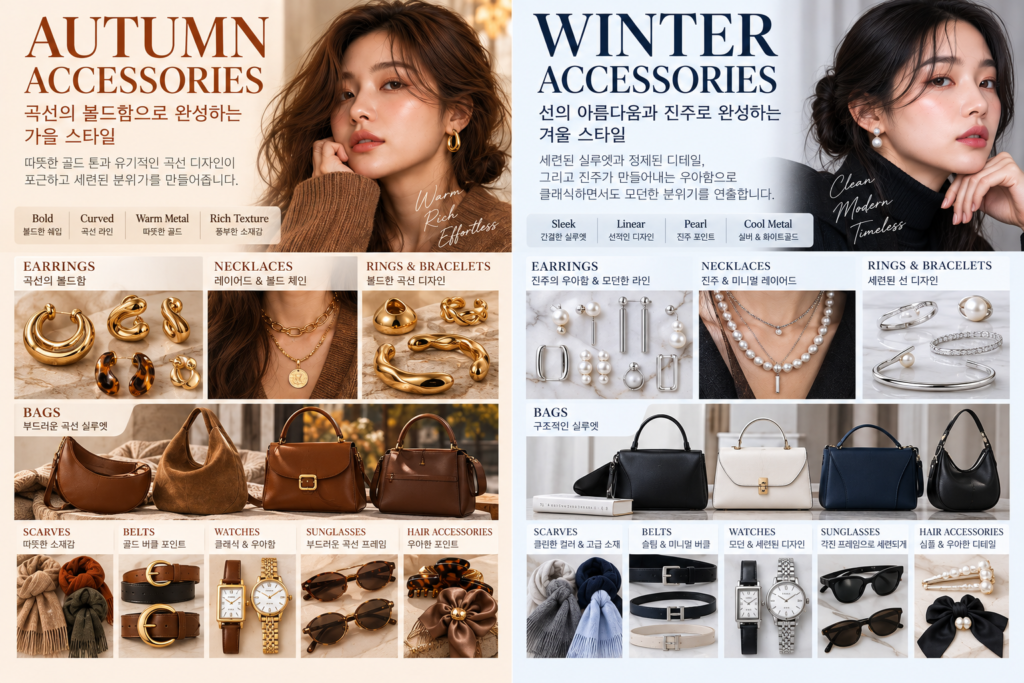
Accessories Can Show the Difference Clearly
Accessories are another easy way to understand the difference between Autumn and Winter.
For Autumn, think curves, warmth, texture, and bold gold details.
Chunkier gold hoops, softly curved earrings, layered gold necklaces, rounded bags, warm leather, tortoiseshell sunglasses, and organic shapes all complement Autumn’s rich and natural quality.
Rather than delicate pearl jewelry, Autumn often comes alive with bold warm metals and sculptural curves.
Winter has a different kind of elegance.
Think clean lines, sleek shapes, silver or white gold, and pearls.
Pearl earrings or necklaces can be especially beautiful on Winter because their cool white sheen works naturally with Winter’s crisp palette.
Slim silver jewelry, geometric earrings, structured bags, clean watch designs, and accessories with straighter lines can reinforce Winter’s refined look.
So the difference isn’t simply gold versus silver.
It’s also:
Autumn — curved, organic, textured, bold
Winter — linear, polished, structured, refined
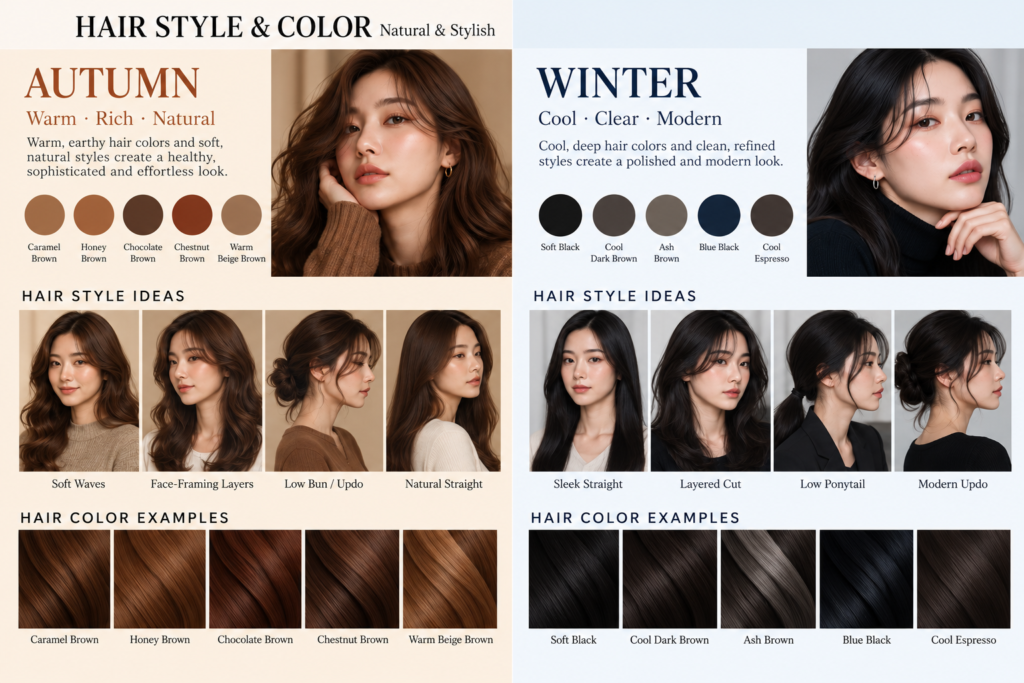
Hair Color and Style Can Change the Overall Impression
Hair is another area where the difference between Autumn and Winter becomes noticeable.
Autumn hair colors tend to feel most harmonious when they have warmth and richness.
Think caramel brown, honey brown, chocolate brown, chestnut brown, and warm beige brown.
Soft waves, face-framing layers, relaxed updos, and naturally flowing styles also complement Autumn’s softer, more organic feeling.
Winter tends to work beautifully with deeper, cooler hair colors.
Think soft black, cool dark brown, ash brown, blue-black, and cool espresso.
Sleek straight hair, defined layers, low ponytails, and clean modern updos can emphasize Winter’s polished quality.
Again, this doesn’t mean you have to wear one specific hairstyle because of your season.
Think of these details as ways to enhance the overall mood that already works naturally with your coloring.
Not Sure If You’re Autumn or Winter?
Because both seasons can handle deep colors, Autumn and Winter can sometimes be surprisingly easy to confuse.
Instead of simply asking:
“Do dark colors look good on me?”
try asking:
“Which kind of deep colors make me look better?”
One of the easiest ways to test this is to compare colors near your face:
Camel vs. Black
Cream vs. Pure White
Olive vs. Emerald
Brick Red vs. Cherry Red
Chocolate Brown vs. Cool Navy
If warm, earthy colors like camel, olive, chocolate brown, and brick make your complexion look more balanced and naturally alive, you may lean toward Autumn.
If black, pure white, cool navy, emerald, and other clear or high-contrast shades make your complexion look brighter and your features more defined, you may lean toward Winter.
Same Depth, Different Beauty
Autumn and Winter are both seasons that can beautifully carry rich, deep colors.
But they express that depth in completely different ways.
Autumn is warm, rich, and earthy. Winter is cool, clear, and striking.
Autumn brings to mind golden afternoon light, fallen leaves, warm textures, and rich natural colors.
Winter feels more like crisp cold air, fresh white snow, clean lines, and colors that appear especially vivid against a cool backdrop.
Neither is more beautiful than the other. That’s really the point of personal color.
The goal isn’t to find the “best” season—it’s to discover which colors naturally work with you.
Now that we’ve compared Spring vs. Summer and Autumn vs. Winter, the differences between the four seasons may be starting to feel a little clearer.
Next, we’ll take a closer look at Autumn and Winter individually, including skin tone, hair color, makeup, clothing colors, accessories, and styling ideas for each season.