Should You Brush Your Teeth Before Breakfast? Dentists Say Yes.
Brushing your teeth is one of the first things many of us do each morning. However, a lot of people believe it’s better to brush after eating breakfast.
According to many dental professionals, though, brushing immediately after waking up may actually be the healthier choice. So why is brushing before breakfast considered better?
What Happens in Your Mouth While You Sleep?
While you’re asleep, your body produces much less saliva.
Saliva plays an important role in washing away bacteria and neutralizing acids in your mouth. As saliva production slows overnight, bacteria and plaque begin to build up. That’s also one of the main reasons why your breath often smells unpleasant when you wake up.
Brushing your teeth first thing in the morning helps remove those bacteria and plaque before they have a chance to mix with your breakfast. This simple habit can help reduce the risk of cavities, gum disease, and bad breath.
If you tend to sleep with your mouth open or often wake up with a dry mouth, brushing as soon as you wake up becomes even more important.
Brushing Before Breakfast Helps Protect Your Teeth
Another benefit of brushing before breakfast is that the fluoride in your toothpaste forms a protective layer over your teeth.
This layer helps strengthen tooth enamel and provides extra protection against sugar and acidic foods you eat during breakfast.
This can be especially beneficial if your morning routine includes:
- Coffee
- Orange juice
- Fresh fruit
- Yogurt
- Other acidic foods or drinks
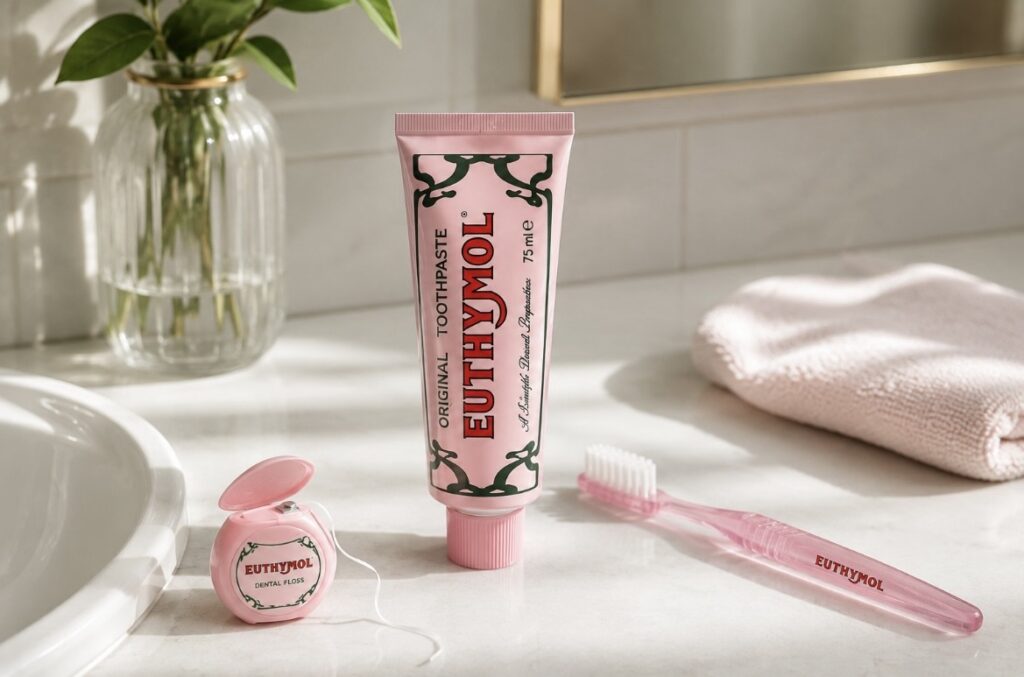
Euthymol Pink Whitening Toothpaste
⭐ Recommended [Shop on Amazon]
Is It Okay to Brush After Breakfast?
Yes—but timing matters.
After eating acidic foods or drinking beverages like coffee or orange juice, your tooth enamel becomes temporarily softer. Brushing immediately afterward may gradually wear away the enamel over time.
Dentists generally recommend waiting at least 30 minutes after breakfast before brushing your teeth.
In the meantime, simply rinsing your mouth with water or drinking a glass of water can help remove food particles and reduce acidity.
Healthy Brushing Habits Dentists Recommend

How you brush is just as important as when you brush.
Here are a few habits dental professionals recommend:
- Floss before brushing to remove plaque between your teeth.
- Brush for at least two minutes.
- Hold your toothbrush at about a 45-degree angle toward your gumline.
- Gently brush your tongue to help reduce bad breath.
- Avoid brushing too hard, as excessive force can damage your gums and wear down enamel.
- After brushing, spit out the excess toothpaste instead of rinsing thoroughly so the fluoride can continue protecting your teeth.
- Replace your toothbrush every three months, or sooner if the bristles become worn.
Healthy Teeth Support Your Overall Health
Growing research suggests that good oral health is connected to much more than just a beautiful smile. Healthy gums and teeth have been linked to better heart health, improved diabetes management, and overall well-being.
Simple daily habits—brushing twice a day, flossing regularly, and visiting your dentist for routine checkups—can go a long way toward protecting both your oral health and your overall health.
What About You?
I used to think brushing after breakfast was the obvious choice. But after learning more about the science behind it, I was surprised to discover that brushing immediately after waking up may actually be the better habit.
Have you been brushing before breakfast or after? Let me know in the comments!