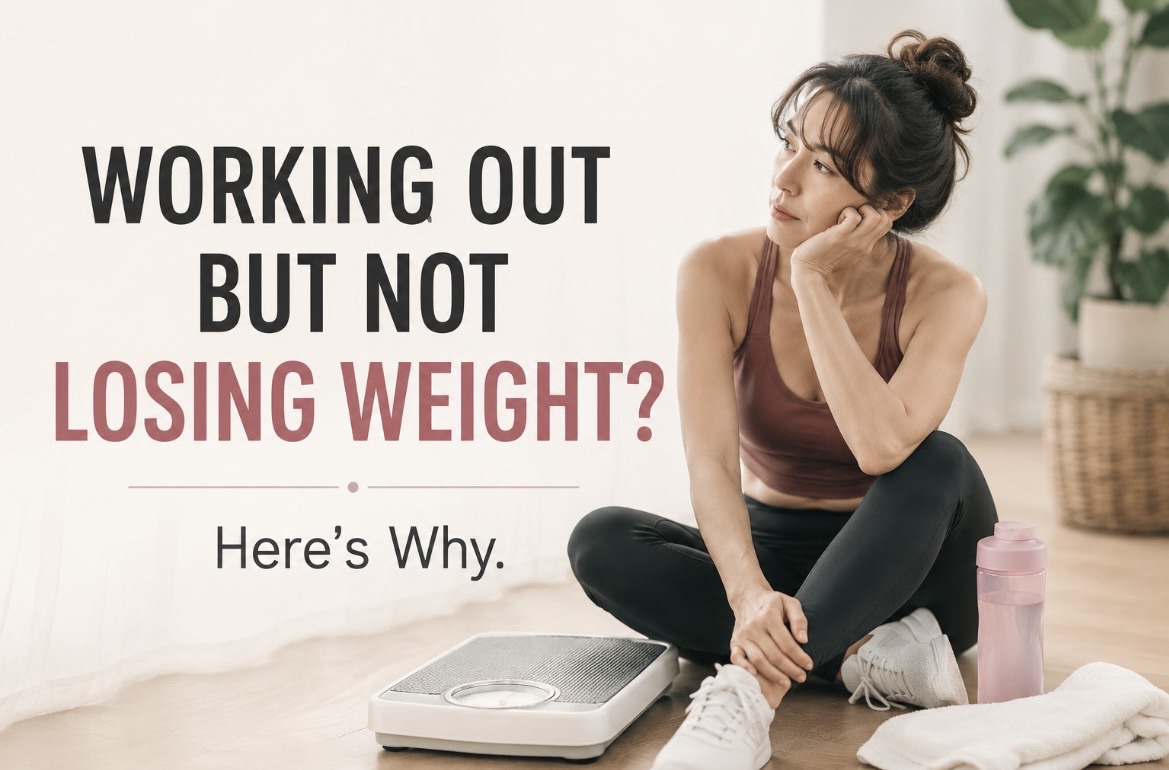
“I Work Out So Hard… So Why Am I Not Losing Weight?” If You’re Over 40, This Might Be Why.

Have you ever noticed people around you who exercise consistently, eat fairly well, and still don’t seem to lose weight or see much change in their body shape?
In fact, some people work out harder than ever, yet their belly fat doesn’t budge. Instead of feeling refreshed after exercise, they feel even more exhausted. By the afternoon, their energy crashes, and they struggle to get a good night’s sleep.
If this sounds familiar, the problem may not be that you’re not exercising enough—it could be that you’re working out too hard.
After 40, Your Exercise Routine May Need to Change
As women enter their 40s, changes in hormones such as estrogen and progesterone make the body much more sensitive to stress.
One of the key hormones involved is cortisol, often called the body’s stress hormone. Cortisol is naturally released during intense exercise to provide energy and improve performance. However, when cortisol remains elevated for long periods, it can begin to work against your health goals.
Chronically high cortisol levels may encourage your body to store more fat—especially around the abdomen—while reducing muscle mass, affecting blood sugar regulation, and interfering with deep, restorative sleep.
That’s why a workout that felt perfectly manageable in your 30s may place much greater stress on your body in your 40s and 50s.
More High-Intensity Exercise Isn’t Always Better
High-Intensity Interval Training (HIIT) has become one of the most popular workouts for burning calories and improving fitness.
It is certainly effective, but doing it every day may actually produce the opposite result.
When high-intensity workouts are performed four to six times a week without enough recovery, the body remains under constant stress.
In this state, your body may become more likely to store fat instead of burning it. You may also notice that:
- Belly fat becomes harder to lose.
- You feel tired more easily.
- Your sleep becomes lighter and less refreshing.
- You constantly feel tense or unable to fully relax.
Experts suggest that for most middle-aged women, two or three HIIT sessions per week are enough.
Your Body’s Condition Before Exercise Matters Too
The effectiveness of exercise depends on much more than the workout itself.
If you’re already dealing with work pressure, parenting responsibilities, relationship challenges, or financial stress, jumping straight into an intense workout may raise your cortisol levels even further.
Your body doesn’t distinguish between emotional stress and exercise stress.
That explains why two people can follow the exact same workout program while experiencing completely different results.
Getting enough sleep and allowing your body to recover are just as important as the exercise itself.
Cardio Alone Isn’t Enough
Many women rely almost entirely on cardio exercises such as running on a treadmill or riding a stationary bike in hopes of losing weight.
However, strength training becomes even more important after 40.
Strength training doesn’t just build muscle. It also helps:
- Increase your resting metabolism
- Improve blood sugar control
- Keep your bones and joints healthy
- Preserve the muscle mass that naturally declines with age
Many women avoid lifting weights because they worry they’ll become too bulky, but this is one of the biggest misconceptions about strength training.
After 40, It’s Not About Doing More—It’s About Training Smarter

Instead of simply exercising more, it’s important to give your body enough time to recover.
Experts generally recommend:
- Strength training 2–4 times per week
- HIIT about twice a week
- Brisk walking for 30–45 minutes on the remaining days
- Including stretching or yoga as part of your recovery
- Prioritizing quality sleep, adequate protein intake, and stress management
The goal isn’t to exercise as much as possible. The goal is to exercise in a way that allows your body to recover and become stronger.
Final Thoughts
Reading about this reminded me that the idea of “the more you exercise, the better” isn’t always true.
If you’ve been exercising consistently, eating well, and still aren’t seeing the results you expected—or if you’re constantly tired and finding it difficult to lose stubborn belly fat—it may be time to focus less on exercising harder and more on finding the right balance between training and recovery.
What about you?
Have you ever experienced working out consistently but not seeing the changes you were hoping for?