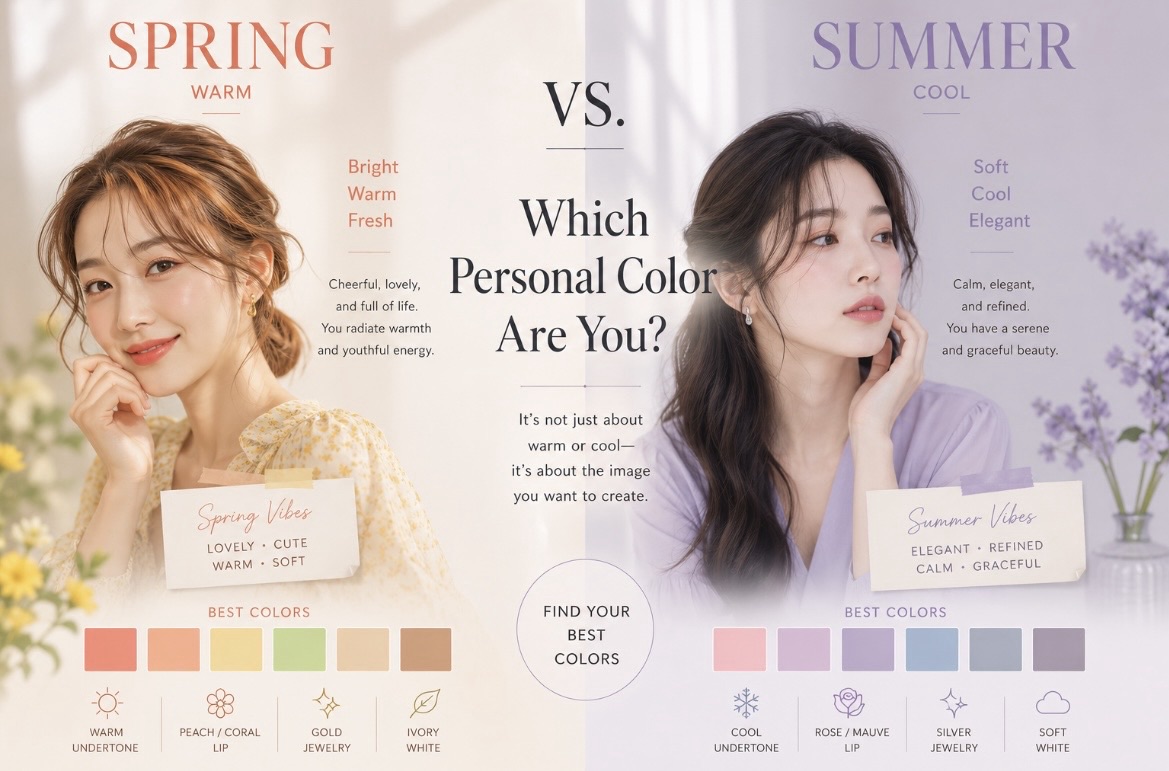
They may both look soft and bright—but the details make all the difference.
Spring Warm and Summer Cool are two of the most commonly confused personal color seasons.
Both seasons look beautiful in light, soft colors and share a fresh, youthful appearance. They naturally create a gentle, approachable impression rather than a bold or dramatic one. Whether for women or men, both seasons are often associated with softness, warmth, and a youthful charm.
Because they have so much in common, many people struggle to tell them apart.
However, once you look beyond the surface, their overall mood and impression are quite different.
The biggest difference comes down to warmth versus coolness.


Spring is a warm-toned season, while Summer is cool-toned.
People with Spring coloring often appear bright, lively, cheerful, and approachable. Their beauty feels warm, playful, and effortlessly charming.
Summer, on the other hand, creates a softer and more elegant impression. Rather than looking playful, Summer types often appear calm, graceful, refined, and naturally sophisticated.
Both seasons are feminine in their own way—but Spring expresses a sweet, lively femininity, while Summer reflects a quieter, more elegant beauty.
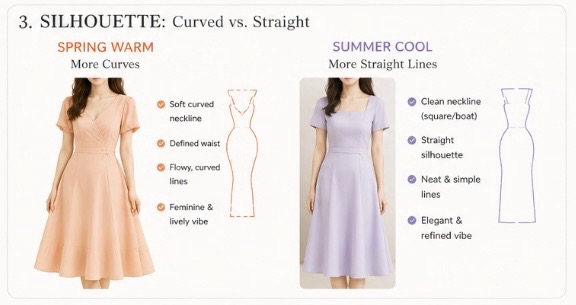
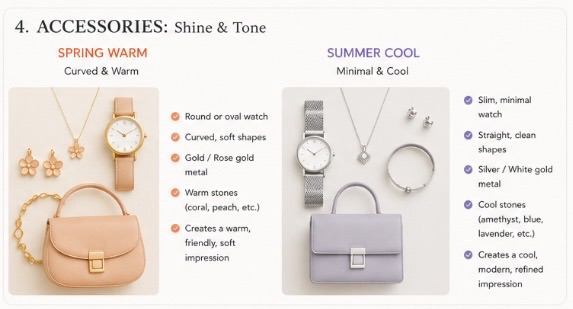
Your Skin Can Give You Clues
Many people assume that having fair skin automatically means they belong to either Spring or Summer.
In my experience, however, it’s not just the color of your skin that matters—it’s also the texture and overall quality of your skin.
Spring types often have skin that looks bright, healthy, and warm. Some even have light freckles that naturally blend into their appearance, giving them an energetic and fresh look.
Summer types usually have skin that appears clear, delicate, and almost translucent. Some people have a subtle bluish undertone, and their veins may be slightly visible beneath the skin, creating a soft and refined impression.
At the same time, not every Summer type has very fair skin. Some have deeper skin tones or a skin texture that feels slightly heavier or richer. That’s why skin color alone should never determine your season.
Skin Texture Matters Just as Much as Color
Personal color analysis isn’t simply about matching colors to your skin tone.
It’s about understanding the harmony between your natural features and everything you wear.
People with lighter, more delicate skin textures usually look best in colors that feel clear, airy, and lightweight.
Those whose skin has a little more depth or visual weight often look more harmonious in colors with greater richness and depth.
The same principle applies to fabric choices.
Lightweight materials like chiffon, silk, or soft fabrics complement delicate skin beautifully.
Meanwhile, textured knits, linen, tweed, or fabrics with more structure often enhance people whose skin naturally has more visual depth.
Color and texture should work together—not compete with each other.
In the End, It’s All About Your Overall Image
When I analyze personal color, I don’t focus on color alone.
I look at the person’s overall image and the feeling they naturally create.
Spring types often leave an impression that is cheerful, lovable, friendly, and full of energy.
Summer types tend to appear calm, elegant, graceful, and quietly sophisticated.
This is why I believe personal color is much more than simply choosing the “right” colors.
It’s about understanding the image you naturally project.
The Most Important Question Isn’t “What Color Am I?”
It’s “What kind of person do I want to become?”
Personal color helps us discover the colors that naturally harmonize with our features.
But that doesn’t mean we have to follow those colors as strict rules.
Everyone has a different image they want to express.
For example, I am a Summer Cool.
However, the image I personally want to create is a little warmer, softer, and more playful.
I love looking approachable, gentle, and charming.
Instead of following every Summer Cool recommendation exactly, I prefer combining the elegance of Summer with the warmth and sweetness that I want to express.
That’s how personal style becomes truly personal.
I Think About Image in Three Different Ways
When I work with personal image, I like to separate it into three different perspectives.
1. Your Natural Image
This is the impression people naturally have when they first meet you.
You may appear elegant, energetic, calm, confident, or approachable without even trying.
2. Your Self-Image
This is how you see yourself.
It reflects the personality and characteristics you believe define who you are.
3. Your Desired Image
This is perhaps the most important one.
It’s the image you intentionally want others to remember.
Do you want to appear warm and approachable?
Elegant and sophisticated?
Professional and trustworthy?
Or perhaps sweet and feminine?
These three images don’t always match—and that’s perfectly okay.
The goal isn’t to change who you are.
It’s to understand who you are, recognize who you want to become, and use personal color as a tool to bridge the gap.
Why Personal Color Matters
When your colors harmonize with your natural features, your complexion appears healthier, your face looks more vibrant, and your overall image feels balanced and refined.
Personal color isn’t about following strict rules.
It’s about bringing out the healthiest and most harmonious version of yourself.
My Philosophy on Personal Color
To me, personal color is not a set of rules that limits your choices.
It’s a tool that helps you express your personality and the image you want to share with the world.
Finding your best colors is only the beginning.
The real beauty comes from using those colors to become the version of yourself you truly want to be.
Still not sure whether you’re Spring or Summer?
In the next articles, I’ll take a closer look at each season individually to help you discover which one truly reflects your natural image.